The Kestner company began making toys and dolls in 1820 and continued making high quality dolls until the onset of WW2. Kestner is particularly beloved because of the range of dolls they produced: papier mâché, wax, all bisque, china, character faces, googlies, Kewpies, children, ladies and more.

The J.D. Kestner doll company, founded by Johannes Daniel Kestner in Waltershausen, Thuringia, was one of Germany’s most prominent and enduring toy manufacturers. Johannes Kestner began by producing simple wooden and papier-mâché toys, but his enterprise grew so vastly that he became the primary employer in his region, earning him the affectionate and respectful nickname “King Kestner.” After over 100 years of artistry and innovation, the Kestner company went into bankruptcy in 1936 and closed permanently in 1938. Their gradual demise was a result of the bitter postwar economy, shifting global markets and loss of leadership.
What set the Kestner company apart from many of its contemporary German competitors was its dedication to complete in-house manufacturing. While other prominent firms frequently outsourced their porcelain doll heads to specialized porcelain factories, Kestner established its own porcelain facilities under the leadership of Adolf Kestner, the founder’s grandson. This allowed the company to control every stage of production, manufacturing its own premium bisque heads, composition bodies, glass eyes, and mohair wigs to ensure unparalleled quality control.

The evolution of Kestner dolls mirrors the technological advancements of the 19th-century toy industry. The earliest dolls from the 1820s to 1840s featured bodies and heads made from lightweight wood, papier-mâché, or wax.

As tastes shifted, Kestner adapted by producing fine glazed china heads.

They eventually transitioned into the high-quality, matte-finish bisque (unglazed porcelain) socket heads that defined the golden age of doll making in the late 1800s and early 1900s.

Kestner was highly celebrated for its exceptional variety of doll types, catering to various markets worldwide, including a massive export trade to the United States. They produced classic “dolly-faced” child dolls with expressive sleeping eyes, multi-jointed composition bodies, and meticulously painted details.

The company also found immense success with its realistic “character babies,” Kewpies and whimsical googly-eyed dolls which captured a more playful, childlike innocence that contrasted with traditional, solemn fashion dolls.
Today, Kestner dolls remain highly sought after by antique enthusiasts for their superior craftsmanship, smooth bisque skin, and historical significance. Because they were manufactured to exceptionally high standards, many Kestner dolls have survived in excellent condition for well over a century. They stand as a testament to the peak of German toy engineering and continue to be a centerpiece of prestigious doll collections worldwide.
Here are more of the lovely dolls shared by our speaker, Carol Woodley, and other members of Letitia Penn Doll Club


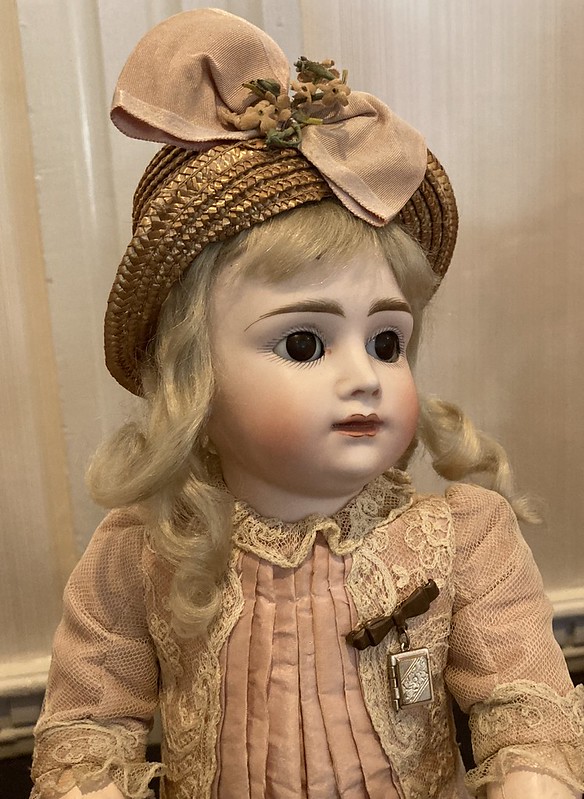


If you are intrigued by the many styles of Kestner dolls, you will love Michael Canadas’ (Carmel Doll Shop and Grovian Museum) series of videos on Kestners. He has shared his expertise through dozens of educational doll videos on You Tube. Here are links to his Kestner videos – they’re a treat:
Letitia Penn Doll Club meets monthly to learn about and share interesting dolls like these. Visit our Events Page for opportunities to connect with our club. Visit UFDC.org for information on dolls and clubs all around the world. https://www.ufdc.org/
Bonus Photo:

 Letitia Penn Doll Club
Leave a comment