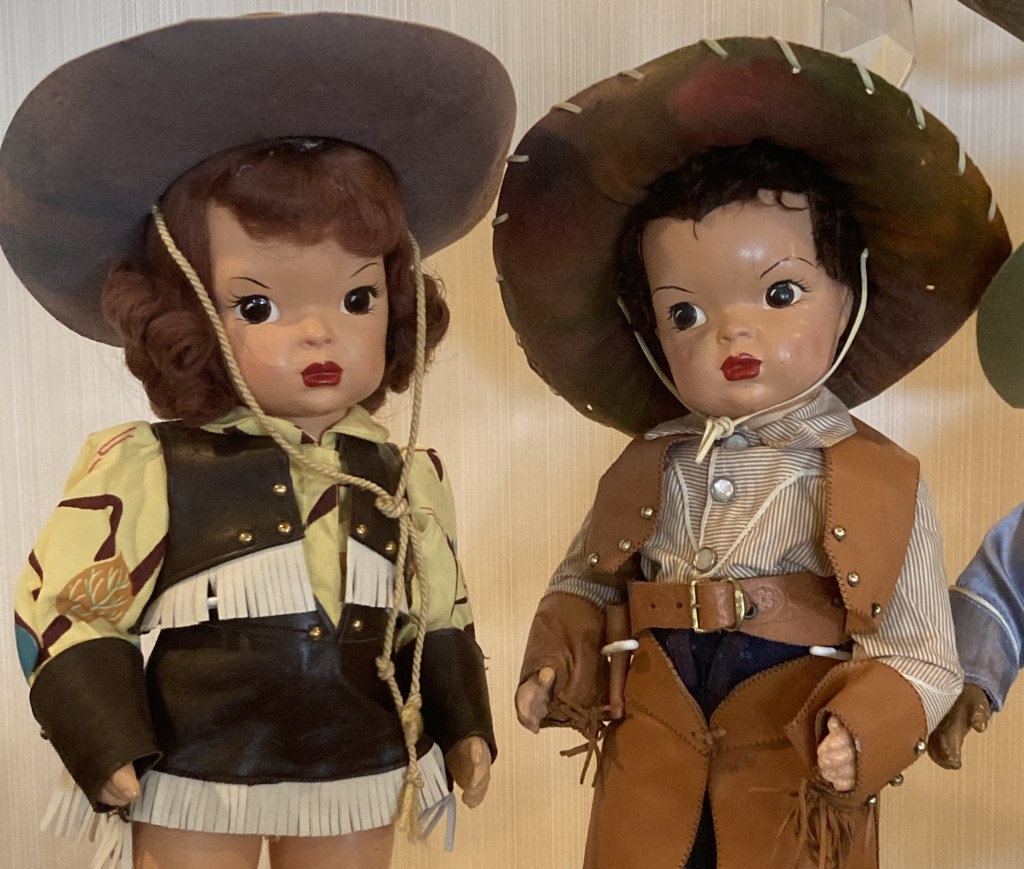
Terri Lee and her many friends (including Jerri Lee, Bonnie Lou, Benjie, Patty-Jo, and others) were the most fashionable toddlers of the late 1940s and 1950s. She was a completely new type of doll–her body was chunky with a toddler’s stance, and her face was very full with puffy cheeks, rosebud lips and dramatic large brown eyes. She was different and the post-war families responded to her.

Letitia Penn Doll Club was treated to a beautiful display of precious Terri Lee dolls representing the full range of the company. Our member, Earl Bethel gave us an overview of the innovations and turbulent times of the Terri Lee family of dolls.

It started with Maxine Runci, a very talented artist in Omaha, Nebraska, who was sculpting heads for high end department store mannequins in 1946. She wanted to make a toddler doll that children could dress, that was charming and realistic like a mannequin.

She sculpted a prototype in the likeness of her daughter and schemed to get into Toy Fair in New York. Violet Gradwohl, an older relative was visiting and saw the prototype. She was enchanted. She accompanied Maxine to New York where things didn’t go as they had hoped, but on the long trip they forged a partnership. Maxine would be the creative force, and Violet would handle the business – even though she had never been a toy manufacturer, and the post WWII business environment was very challenging. They named the doll after Violet’s daughter, Terri Lee, and the adventure began.

The first production dolls in 1946 and 1947 were composition. The distinct faces were hand painted—first by Maxine until some workers mastered the technique. Women were hired to make wigs and many made dresses in their homes. Montgomery Ward offered a blonde Terri Lee in the 1946 Christmas catalog, priced at $11.50. The doll was a huge success with more than 8,000 sold by the end of the year. Everything ramped up dramatically.
The fashions were always a very important part of Terri Lee’s appeal. The clothes were like the best quality fashions worn by real children. They were made of fine materials and constructed to withstand play and washing.

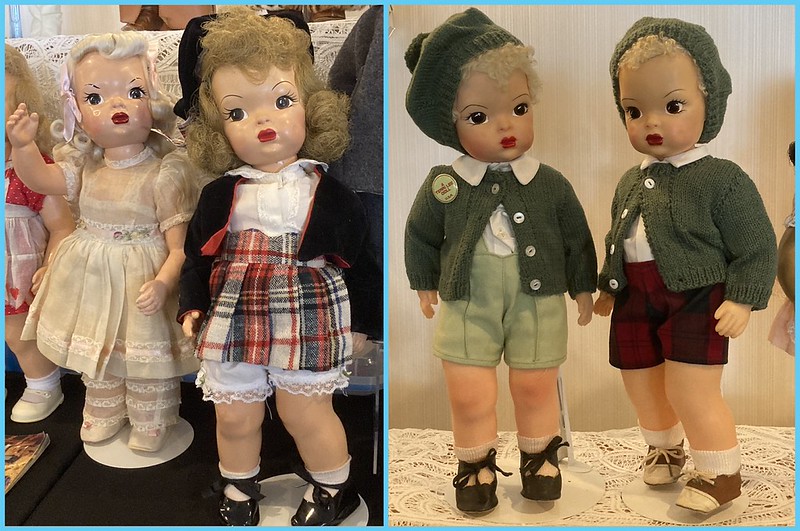
The Terri Lee company is very admired for the early adoption and innovative use of plastics—the first plastic Terri Lee dolls were made before the fall of 1947.
A remarkable innovation that was appreciated by their customers and today’s collectors is the inclusion of dolls of color and costumes from other cultures. By early 1947, Terri Lee had a brother, two Mexican friends, an Alaskan friend, and two black friends. But that’s not all…


In August 1947, a contract was signed with Jackie Ormes to create Patty-Jo, a doll based on the clever young girl from her popular comic, “Patty-Jo ’n’ Ginger;” which ran in the Pittsburgh Courier. The progressive cartoonist, Jackie Ormes was a glamorous, creative, successful, African American female role model and she worked with Terri Lee to make a beautiful stereotype-busting doll.

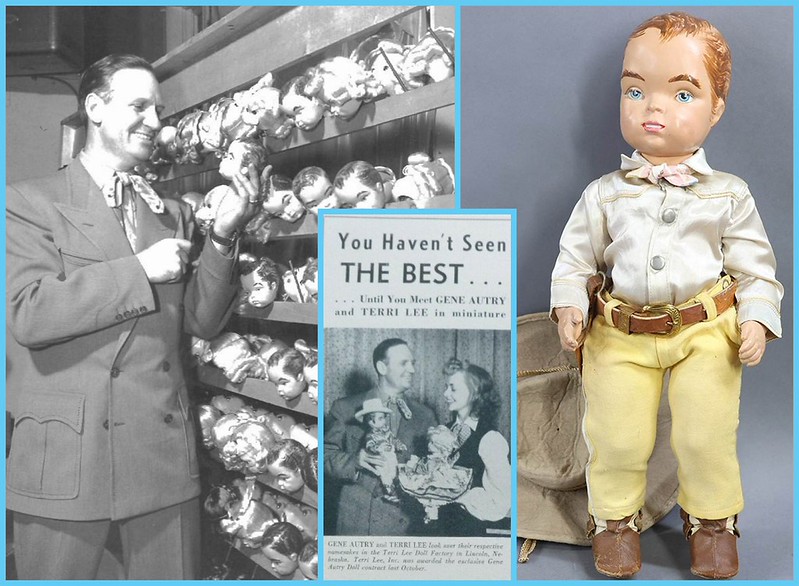
After this collaboration, they worked with Gene Autry and made a doll in his likeness!
Following this explosive initial growth, Maxine found herself pushed aside by Violet who took credit for designing the doll. Maxine was unable to protect her work.
The company continued to grow and move to larger factory spaces. They innovated new plastics and joinery techniques. Another sculptor was commissioned to design a vinyl baby doll in 1951 but the doll’s materials proved unstable. In 1951 the factory burned and was a complete loss–many products used in the doll manufacturing were highly flammable.
A new factory was opened in Apple Valley, California in 1952 and they produced more than 100,000 dolls and 500,000 outfits that year. Violet bought a ranch and filled it with beautiful things, including furniture that once belonged to silent film star Rudolph Valentino. She kept racehorses and reportedly owned a pair of monkeys at this time. Things were going well!

The company became embroiled in an ugly legal case when the plant manager was fired. He sued and won, but Violet got the decision reversed and he received a reduced settlement. Still, it was bruising. Another employee left the company and began making a Terri Lee clone and selling it cheaper–always a common issue in the doll market. Violet won a copyright infringement lawsuit, but reworked dolls quickly reappeared on the market. Despite these legal distractions, the company continued to grow.
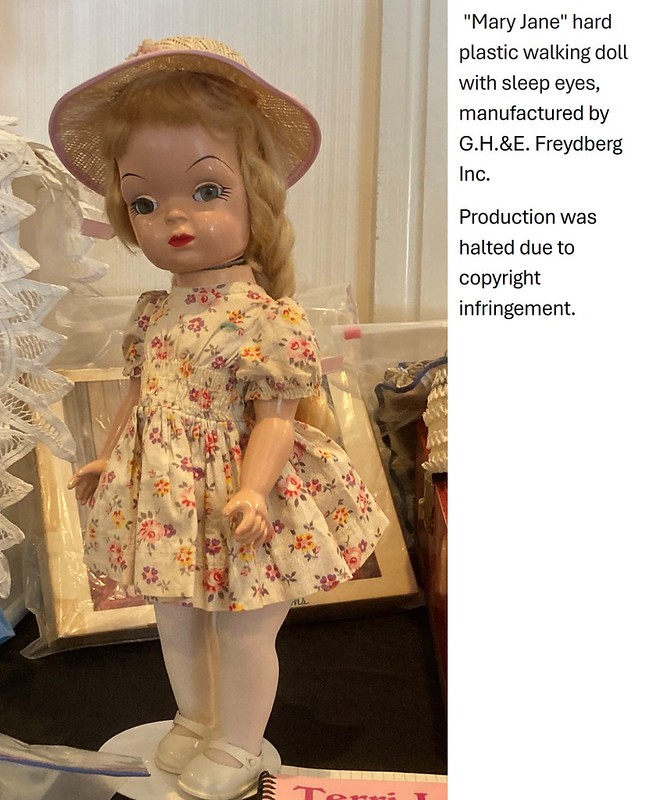
In 1955 new lines were introduced that failed due to design and material issues. More space had been acquired and a huge $230, 000 loan was obtained in anticipation of great demand for the new dolls. The debt was too much. By 1957, the enterprise was about a million dollars in debt, some employees weren’t being paid and foreclosures were imminent.
Violet had been distracted by her great love: her Arabian racehorses. She was beset with personal problems, having married and divorced her husband twice, and her long-time reliable assistant had left the company. In desperation, Violet hired a financial advisor who turned out to be the worst sort of conman. In 1958, the Apple Valley factory caught fire–in seven different parts of the facility… It was proven that the financial advisor had set the fires. Violet was forced to sell all the remaining assets including her ranch but failed to raise a fraction of the debt.
In the early 1960s, Violet tried a couple partnerships with other manufacturers to produce new versions of Terri Lee but the efforts floundered. Violet died in 1972 of a rare neurological condition.
Collectors have not forgotten Terri Lee and her friends. There are Terri Lee doll clubs and Peggy Wiedman Casper wrote a comprehensive book about the doll and her fashions. Doll News, the United Federation of Doll Clubs’ quarterly journal has published great articles.
Here are some resources you will enjoy:
- Fashionable Terri Lee Dolls by Peggy Wiedman Casper. Look for it on Amazon and ABE Books. Used copies are often reasonably priced. LINK to Amazon
- The Best-Dressed Doll in the World: Nebraska’s Own Terri Lee LINK to History Nebraska
- Sherry’s Terri Lee Doll Clinic LINK to Sherry’s Site
- “Patty-Jo: A Terri Lee Doll” by Nancy Goldstein, Doll News, Summer, 2007 (UFDC logon ID required) LINK to Doll News Summer 2007
- “Terri Lee: All Wrapped Up” by Sandy Dorsey, Doll News, Winter, 2007 (UFDC logon ID required) LINK to Doll News Winter 2007
- Terri Lee Doll Friends Facebook Group LINK to FB Group
- Terri Lee website (a new Terri Lee doll) https://terrilee.com
- Jackie Ormes: The First African American Woman Cartoonist by Nancy Goldstein LINK to Amazon
- “One Tenth of a Nation,” Library of Congress. Jackie Ormes is featured in a segment at the 11-minute mark. LINK to You Tube
Letitia Penn Doll Club meets monthly to learn about and share interesting dolls like these. Visit our Events Page for opportunities to connect with our club. Visit UFDC.org for information on dolls and clubs all around the world. https://www.ufdc.org/
BONUS Photo:

 Letitia Penn Doll Club
Leave a comment